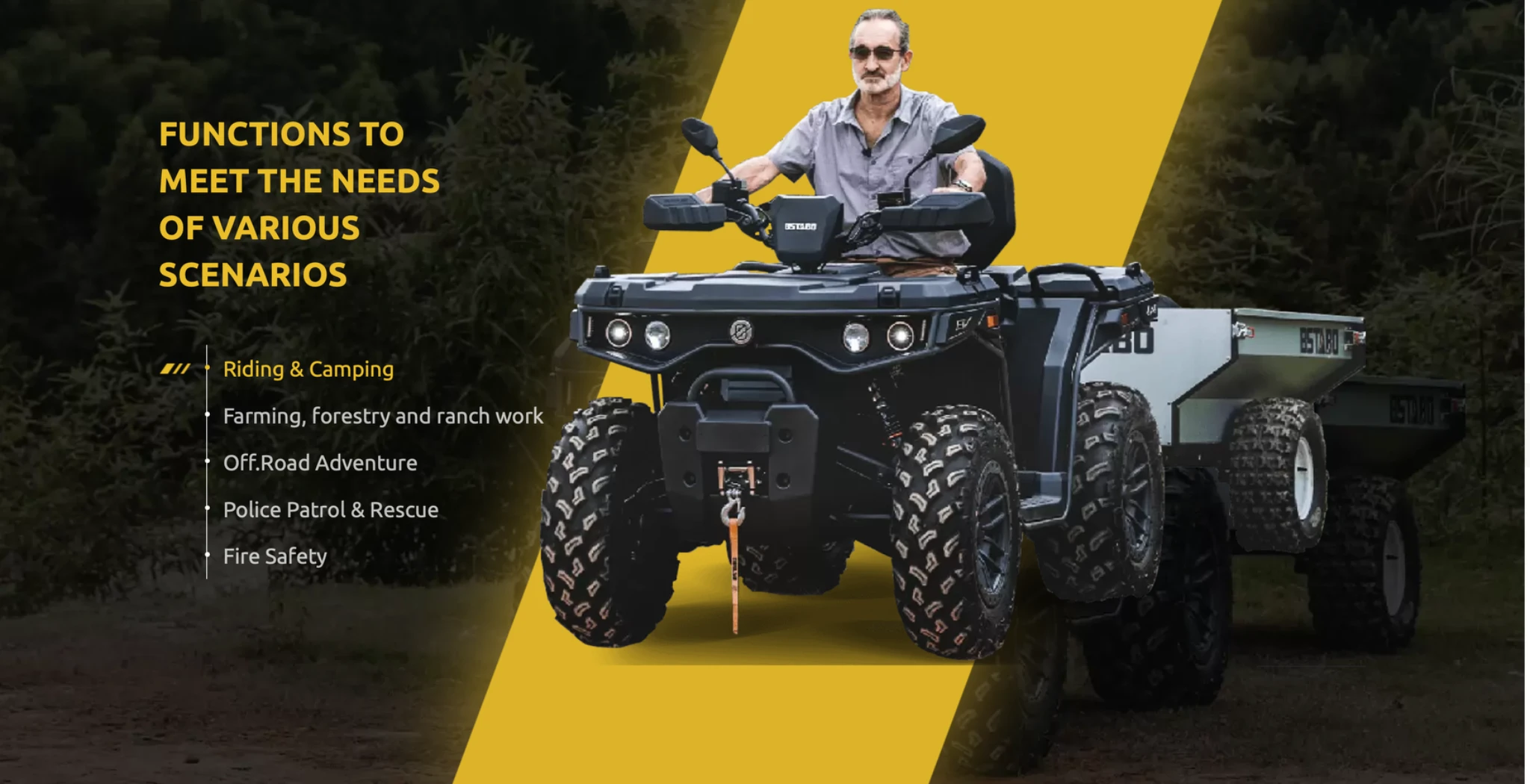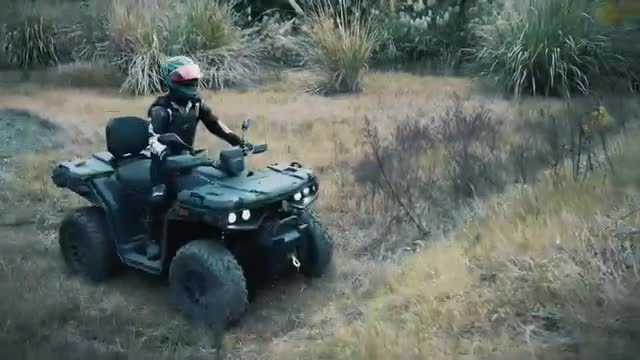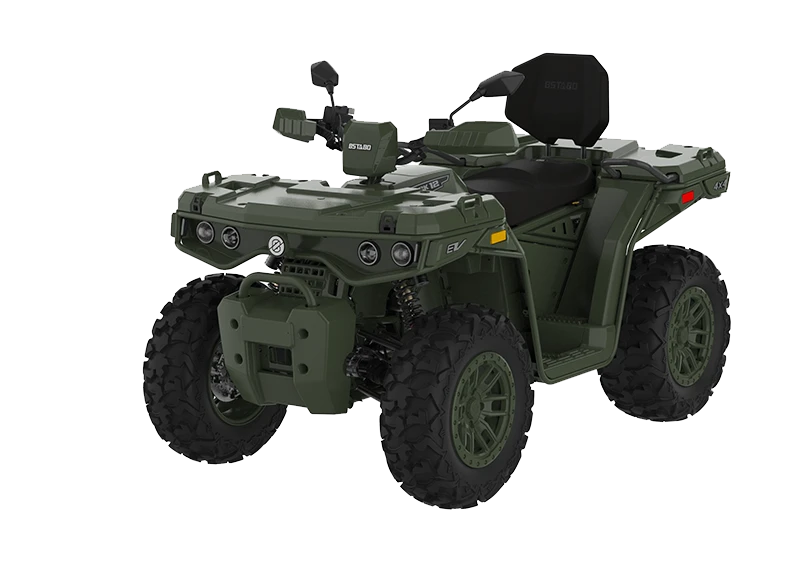
Checking fencing, taking tools to an outbuilding or delivering supplies to a field: short journeys are part of everyday farm work. An electric ATV can be a practical addition to existing machinery for an agreed range of tasks.
Which yard tasks could fit?
List the journeys for which you currently use a larger vehicle. Inspection rounds and carrying small repair supplies are useful starting points. A suitable trailer can also move appropriate loads between storage and the work area. Weight and volume matter as much as distance.
Give the ATV a clearly defined role. A full water tank or large bale creates a very different load from a tool box. For these loads, have the vehicle, trailer, coupling and route assessed together. A towing figure in a brochure does not approve every combination.
Electric yard transport and business emissions
The electric journey has no exhaust. Charging electricity and vehicle production still contribute to the climate balance. The EPA explains this lifecycle approach.
Describe the change as electrifying specific yard journeys. It does not automatically alter other emissions from the farm. The starting point matters: are you replacing a fuel-powered trip, adding transport or replacing a walk? These do not produce the same outcome.
Keep vehicle use separate from housing systems, manure management and other activities. A business-wide assessment needs information about all relevant sources. ECX MOTO can discuss the ATV application, but a model name cannot establish a farm-wide reduction percentage.
Move predictably around horses
At riding schools and livery yards, vehicle routes may run close to animals and visitors. Agree fixed routes, speeds and passing places with staff. An electric ATV is not silent: tyres, the drivetrain and the trailer remain audible. Do not assume a horse will automatically be comfortable with the combination.
Keep feed and clean supplies separate from used materials. Decide how each load will be covered and secured. An organised round can reduce separate movements and repeated trips back to storage.
Plan charging around the busiest day
Use a demanding working day as the starting point, including loaded journeys and soft ground. Identify when the ATV is parked and where charging is possible. Confirm the battery, charger and connection for the exact specification. Solar panels only contribute to that charging plan when suitable electricity is actually available at the relevant time.
During a trial, record completed rounds and charging energy. Compare equivalent work with your existing approach. Allow for extra journeys and access to the charging location.
Could a ROCK EV suit your yard?
Explore the BSTABO ROCK EV and our electric work ATV buying guide. ECX MOTO in Beekbergen can discuss daily tasks, routes and the trailer you need. For occasional jobs, ask about utility services on site.
Is an electric ATV maintenance-free?
No. Tyres, brakes, suspension and the trailer still need inspection and maintenance. Request the schedule for the actual version offered and plan servicing around your business activities.
Discuss your situation
Call +31 6 1942 9777 or message us on WhatsApp. Visits to Kuiltjesweg 35 in Beekbergen are by appointment.
About this article: practical considerations from ECX MOTO. Product figures are taken from the supplied BSTABO material; the exact specification and suitability are confirmed when you enquire.