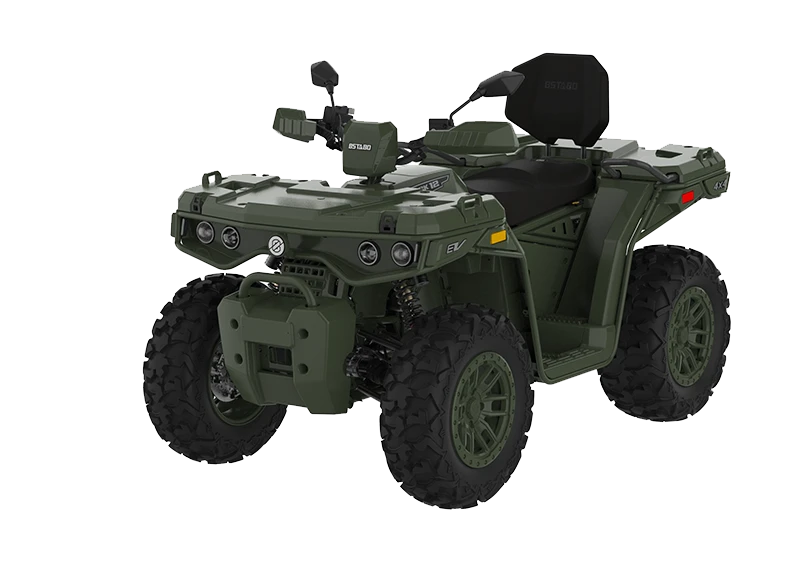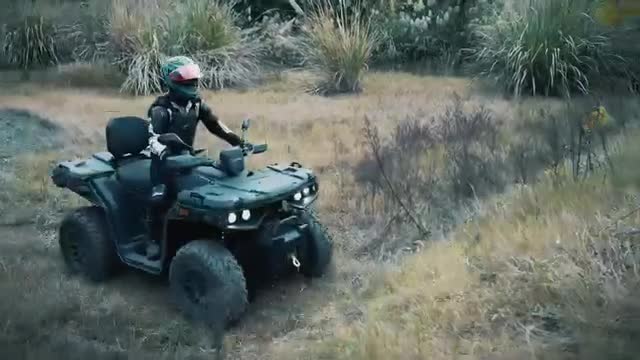
For a working ATV, useful range means the number of tasks you can complete with your usual load and enough reserve remaining. A maximum-distance figure cannot describe every route, surface or working day.
Test range and working range are different
A published range belongs to particular test conditions. Constant-speed travel on level ground differs from short trips over soft surfaces with a trailer. Check the vehicle version and test behind each figure: a brochure maximum and a homologation test result are not automatically comparable.
Polaris explains for its electric off-road vehicle that factors including speed, temperature, terrain, load and tyre pressure influence range. This supports the general planning principle; its vehicle figures are not a range promise for a BSTABO. Use the documents for the exact ROCK EV version when discussing that vehicle.
What changes when towing?
A trailer adds mass and rolling resistance. The effect depends on tyres, load, surface, gradients and driving behaviour. There is no reliable universal percentage to subtract from every range claim. Check that the vehicle, coupling and trailer suit the task before estimating battery use: sufficient charge does not establish load limits or stability.
Our ATV and trailer guide explains how to prepare the combination and route.
Measure a representative routine
- Choose a normal route and usual load.
- Record starting and ending battery percentage, distance and active driving time.
- Note temperature, surface and operating mode.
- Repeat across several representative working days.
- Keep a reserve for additional trips and less favourable conditions.
Battery percentage is a planning signal, not a laboratory measurement. Follow the vehicle instructions and do not schedule work down to an exact zero reading.
A calculation using rounds
Suppose, purely as an example, six comparable rounds use 30 percentage points of charge. That averages five points per round. A chosen working window from 80% to 30% would mathematically allow ten similar rounds. This lower limit is an example planning assumption, not a BSTABO instruction.
Do not extrapolate indefinitely. A different load or surface changes the result. Start conservatively and check whether actual consumption continues to match. For work that may overrun, plan an alternative way to complete transport.
Connect range with charging access
Even adequate range may be inconvenient if the charging location is unavailable at shift change. Assign responsibility for plugging in and checking readiness. See the charging-time and cost guide.
To discuss the BSTABO ROCK EV, send ECX MOTO your route, load, working hours and charging options. These details help identify which practical checks are useful before purchase.
Discuss your situation
Call +31 6 1942 9777 or message us on WhatsApp. Visits to Kuiltjesweg 35 in Beekbergen are by appointment.
About this article: practical considerations from ECX MOTO. Product figures are taken from the supplied BSTABO material; the exact specification and suitability are confirmed when you enquire.